Incremental games work by turning small gains into compounding progress. The player earns a resource, buys generators or upgrades, increases production, unlocks automation, hits a slowdown, then uses prestige or new systems to make future progress faster.
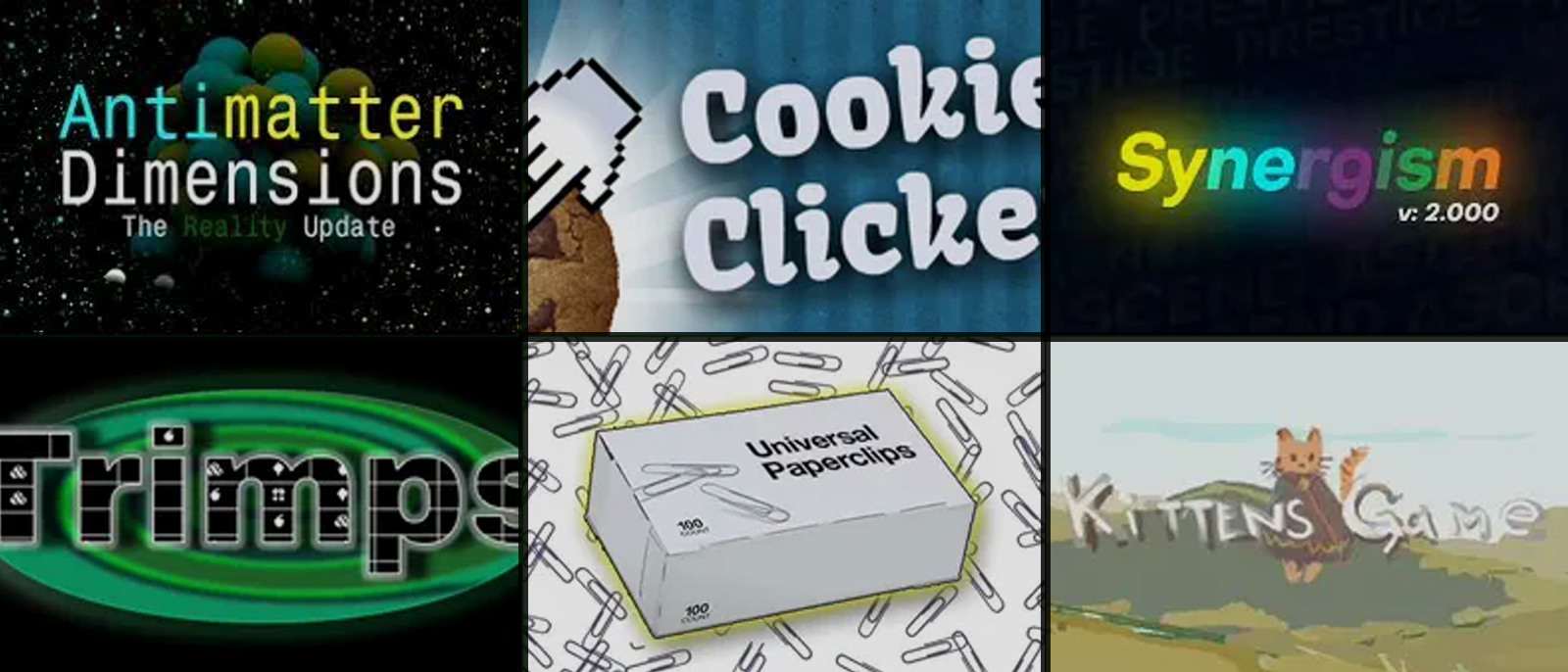
Strong examples include Antimatter Dimensions, Cookie Clicker, Synergism, Trimps, Universal Paperclips, Kittens Game, and Realm Grinder.
The Core Loop
Most incremental games follow a simple loop:
| Step | What It Does |
|---|---|
| Earn | Gives the player a resource |
| Spend | Turns that resource into better production |
| Multiply | Makes future earnings faster |
| Automate | Removes repetitive actions |
| Slow down | Creates a wall or bottleneck |
| Reset | Trades current progress for permanent power |
| Unlock | Adds a new system that changes the old loop |
The loop works because each stage makes the next stage more interesting. A good incremental game does not only make numbers bigger; it changes what the player is thinking about.
Generators
Generators are systems that produce resources over time. A generator can be a building, unit, worker, dimension, business, skill, machine, or abstract production layer.
Generators matter because they turn manual progress into managed progress. The player stops clicking for each unit and starts deciding which production source deserves the next investment.
Upgrades and Multipliers
Upgrades make generators stronger. Multipliers increase production, damage, speed, efficiency, or resource gain.
The best incremental upgrades are easy to understand but hard to optimize perfectly. A cheap upgrade may give immediate progress, while a more expensive upgrade may change the long-term route.
Automation
Automation is what turns repetitive action into strategy. A player may begin by clicking, buying manually, or running short cycles, but automation eventually handles those actions.
Good automation does not remove the game. It changes the player's job from doing tasks to managing the system.
Scaling and Softcaps
Scaling controls how fast numbers grow. Early progress often feels fast, then costs increase and the player hits a softcap.
A softcap is a slowdown, not a hard stop. It tells the player to optimize, unlock a new system, or reset. Bad softcaps feel like waiting; good softcaps create a reason to think.
Prestige and Reset Layers
Prestige is a reset that gives permanent power. The player gives up current progress to earn a bonus, currency, multiplier, or new layer that makes future runs stronger.
Reset layers are one reason incremental games can last so long. They let a game restart without feeling like wasted time.
Unlocks and New Layers
The best incremental games keep adding layers that change earlier systems. Antimatter Dimensions does this with challenges and later mechanics. Synergism does it with currencies and prestige layers. Trimps does it with maps, zones, gear, and automation.
New layers are the difference between a shallow number climb and a lasting incremental game.
FAQ
What is a generator in an incremental game?
A generator is anything that produces resources over time, such as a building, unit, worker, machine, dimension, or automated production source.
What is scaling in incremental games?
Scaling is how costs, production, rewards, and difficulty grow over time. Good scaling keeps progress satisfying without making the game either too fast or too slow.
Why do incremental games use prestige?
Incremental games use prestige to turn slowdowns into strategic resets. The player restarts with permanent bonuses or new systems, making future progress faster or deeper.
Are all incremental games idle games?
No. Many incremental games include idle progress, but an incremental game can be more active if progress depends on choices, timing, or repeated input.